All American: The People for the People Who Became One
After 8 seasons of All American, I loved them all. In each season, I found myself in alignment with the story. I met myself through characters like Olivia, Spencer, and Layla. Even the disruptor nature of Coop had my head on a swivel. I remember watching the first 5 seasons over again before the next few seasons aired because I needed to feel more deeply into who I was becoming.
This show had me laughing and crying. Olivia’s fight for herself and her community landed softly in my heart when she felt like she needed to be someone other than who she was. Even in a state of panic and healing her way through sobriety, she showed up for her family and friends. My favorite part of her character development is that she allowed herself to be vulnerable to the end. It was beautiful watching her trust herself while everyone doubted her once again. Their projected fear is what made her fight for what she knew about Spencer become much stronger.
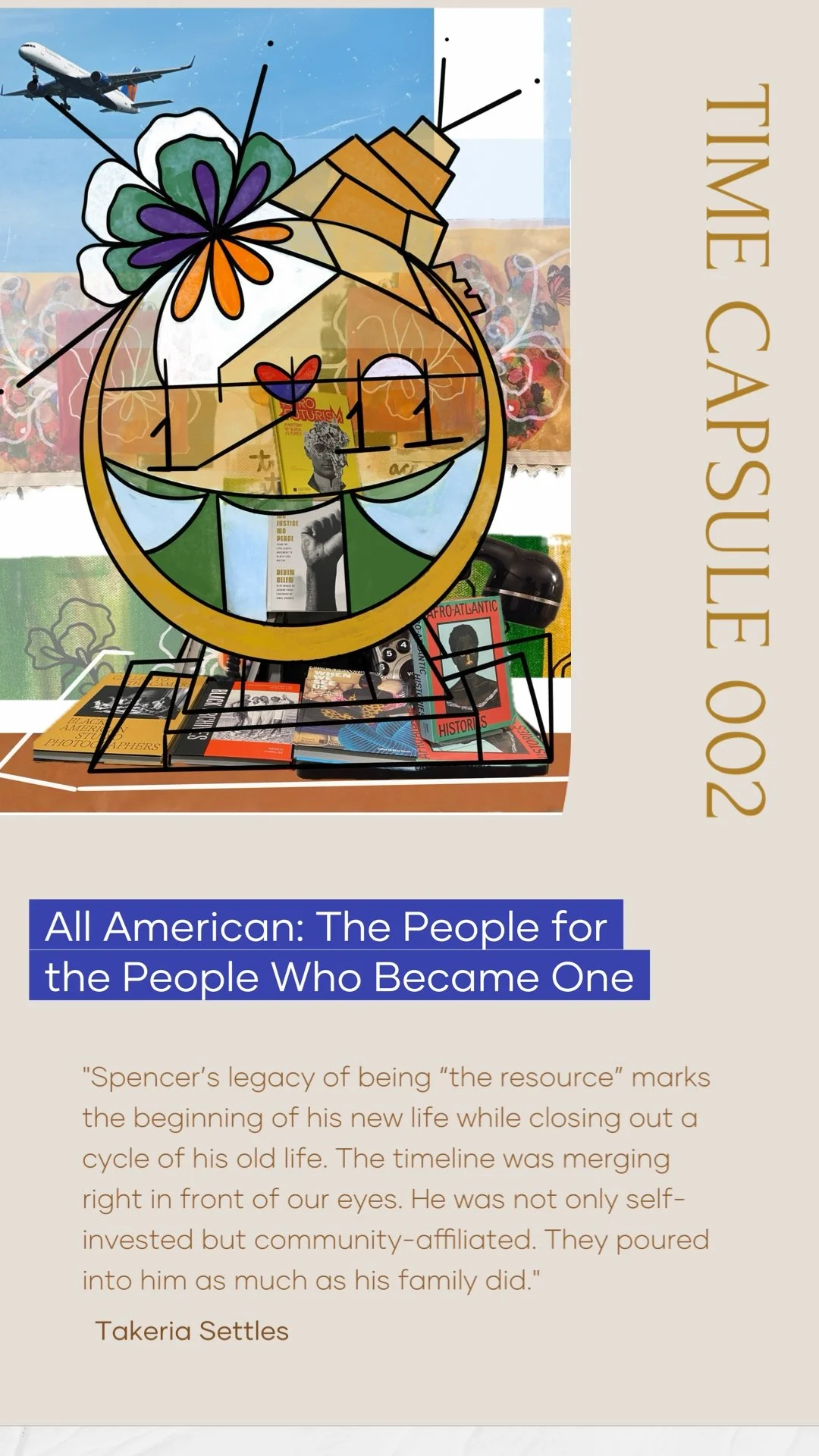
I love that she and Spencer ended up together with twins. Spencer’s legacy of being “the resource” marks the beginning of his new life while closing out a cycle of his old life. The timeline was merging right in front of our eyes. He was not only self-invested but community-affiliated. They poured into him as much as his family did.
As the story progressed, I still had my share of emotional combat. Fighting back tears because the feeling of being celebrated clashed with my feelings of being ostracized. I made it my personal mission to evolve in my own way. Looking beyond my rose-colored glasses, I got to see that my family was just my son and I. While my life had reminded me that I deserved more than being dependable, I became adaptable. My life became livable again.
Through my truth and deep understanding, “the resource” Spencer was referring to was not just himself but the embodiment of his inner union. Most people may mistake that comment for ego, but is it really? Ego doesn’t really share its shine with the grind. It usually is against it. It usually ignores all other hands and minds involved.
He knew that even with having the fastest legs and a strong throwing arm, his hand wasn’t the only hand that played football. It was about his legacy being more than just football but his family. His return home was the greatest return on investment because this is where we see the time-lapse of memories that created the story itself; the man and father he chose to be.
Then there is Layla.
I’ve always had a soft spot for Layla, somewhere between longing for a mom bond that she talks about and the ghost of a mother. Layla is a boss, but not your average boss. She’s the strategic manager. The one who picks up the subtle feeling in the room.
I’m proud of her after dealing with loss after loss in ways that almost broke her but didn’t. She learned to be vulnerable with herself while dealing with an inner dialogue that could have taken her life away. Her support system reminded her of choosing herself while pursuing her passions. She used music and producing to create a new life.
I’m happy Jordan became her husband because together they flourished, but as an individual she became more resilient, more bold, and more compassionate. Her acceptance of no control was her greatest comeback.
And then there’s Coop.
Coop is the hardest comeback for me because she moves between savior, survivor, and supporter. She struggles between selflessness and selfishness, and it comes at a great cost. As a natural disruptor herself, Coop’s realization of why she was fighting so hard in the first place became one of the most meaningful parts of her story.
From gang member to lawyer, her journey was fierce.
Coop is the backbone. She is woven into all of their lives when it comes to both tragedy and victory. She learns herself through many dark memories, and in the end, she chooses her community and family—and they choose her back.
Her creative alchemy was shaped not only by her survival but by her way of living that made it possible for Amina to step up. She became the community representative for both trauma and joy. She carried the parts of herself that knew what pain could do without allowing pain to become the only thing she could represent.
And that may be what moved me most about Coop.
She was able to hold her capacity for joy even after she thought she couldn’t see herself anymore.
This show took me down a path where I could have lost myself too. But like Coop, I represent the wound and what it looks like to live outside of it.
I learned when to put things down. Showing up for myself and choosing me has helped me cultivate a life worth living every day. And when the hard ways feel more difficult, I’m reminded of what I’ve already survived to become.
Maybe that is what I was really watching all along.
Not people who had perfect lives.
People learning how to become whole while still carrying the lives they had lived.
People learning when to fight, when to surrender, when to trust themselves, when to let others love them, and when to choose themselves.
People who became more than the wounds that introduced them to themselves.
The People for the People Who Became One.